Introduction
Have you ever suffered from a stuffy nose that refuses to clear, headaches that keep returning, or jaw pain that makes eating uncomfortable? If so, you might have visited different specialists for each problem — an allergist for your nose, a neurologist for your head, and a dentist for your jaw. And yet, the relief was either temporary or never came at all.
What if we told you that all three issues could originate from one tiny area at the base of your skull?
The suboccipital muscles — a small group of muscles where your skull meets your neck — are among the most nerve-rich and influential muscles in your entire body. When they become tight, strained, or dysfunctional, they can create a ripple effect that impacts your breathing, your head, and your jaw.
This article explains, in plain language, how these tiny muscles connect to seemingly unrelated problems — and what you can do about it.
Part One: What Are the Suboccipital Muscles?
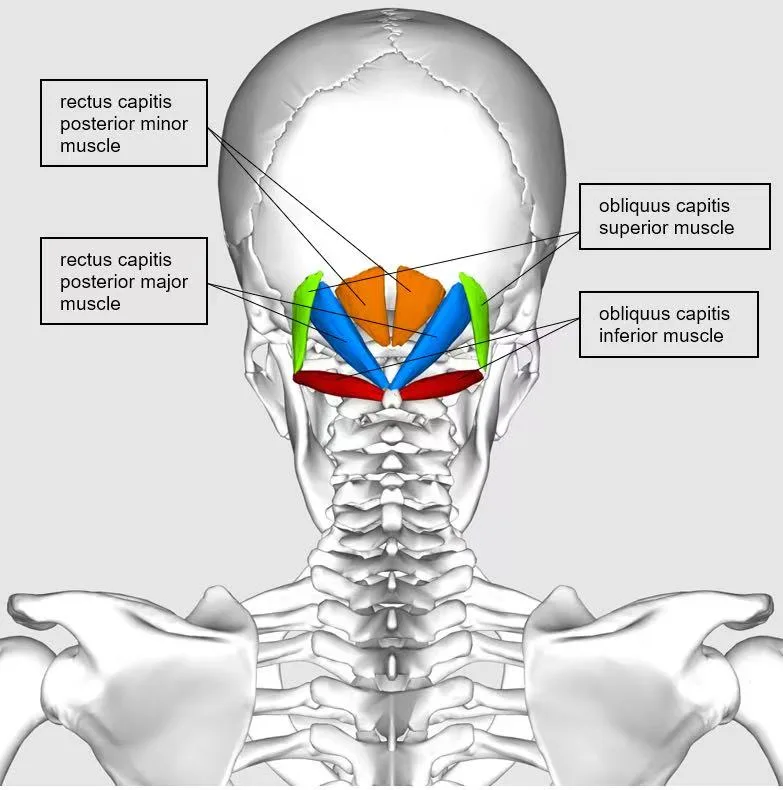
The suboccipital muscles are a group of four small paired muscles located between the occipital bone (the base of your skull) and the first two cervical vertebrae (C1 and C2). Their names are:
- Rectus capitis posterior major
- Rectus capitis posterior minor
- Obliquus capitis superior
- Obliquus capitis inferior
Despite their small size, these muscles are extraordinary. They contain 6 to 10 times more sensory nerve endings (muscle spindles) per gram than larger muscles like your glutes.
Think of them this way: your glutes are like heavy-lifting workers — they provide raw power. Your suboccipital muscles are like the gyroscope in a spaceship — they constantly send signals to your brain about your head position, eye movement, and overall balance.
Because they have such a rich nerve supply, they have a "direct line" to your brain. This makes them essential for posture, balance, and fine motor control of your head. But it also means that when they become tight or irritated, the consequences are felt far beyond your neck.
Part Two: Suboccipital Muscles and Rhinitis — The Nose–Neck Connection
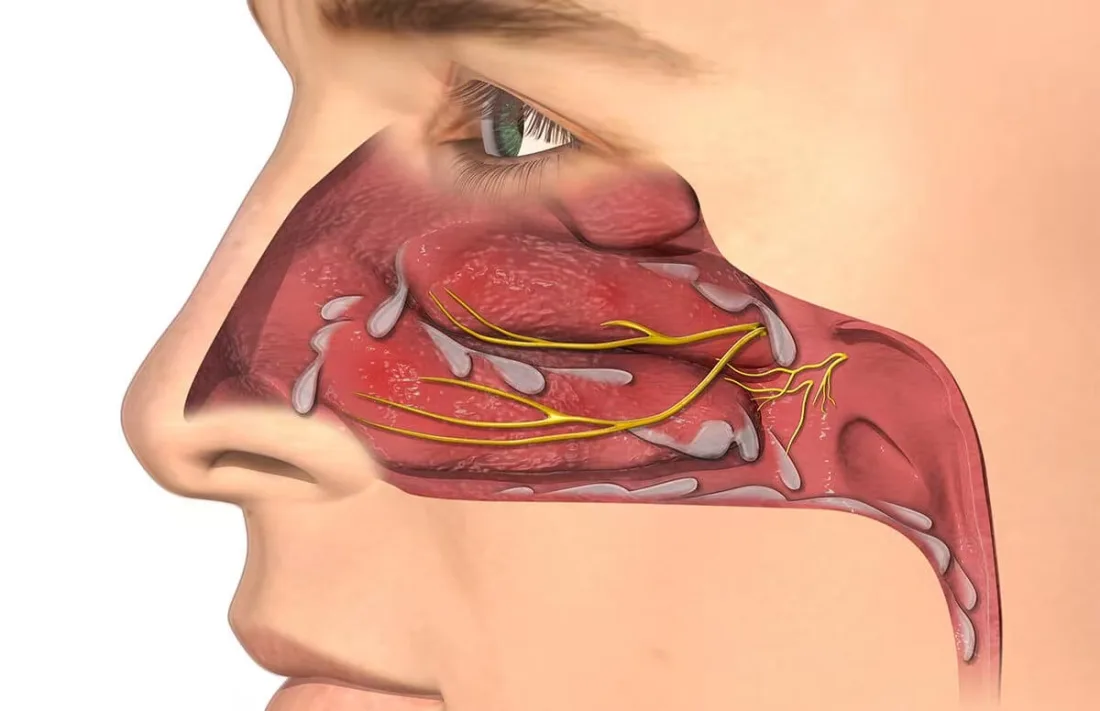
If you suffer from chronic nasal congestion that doesn't respond well to allergy medications, you might be surprised to learn that your neck could be part of the problem.
How Does This Work?
1. Forward head posture affects breathing. Modern life — hours of scrolling on phones, working at computers, and driving — pushes our heads forward into what professionals call "forward head posture" or "turtle neck." In this position, your head can sit 2 to 3 inches (5–7 cm) in front of its natural centre of gravity. For every inch your head moves forward, the effective weight of your head increases by approximately 10 pounds (4.5 kg). Your suboccipital muscles must work overtime — constantly contracting — just to keep your eyes level with the horizon.
This sustained tension:
- Pulls your upper cervical spine out of alignment
- Compresses your chest cavity
- Prevents your ribcage from expanding fully during breathing
When your chest can't expand, your breathing becomes shallow. Shallow breathing means less air moves through your nasal passages, which can worsen nasal congestion and make you feel like you can't get enough air.
2. Nerve reflex pathways. The upper cervical nerves (C1–C3) have reflex connections with the phrenic nerve, which controls your diaphragm — the primary muscle of breathing. When your suboccipital muscles are constantly sending "distress" signals to your brain, this can interfere with the autonomic nervous system, which regulates the blood vessels and glands inside your nose. In simple terms: tight suboccipital muscles can send signals that make the blood vessels in your nose swell and produce more mucus.
What Does the Research Say?
A clinical study examined the effect of cervical muscle exercise on patients with allergic rhinitis. After an eight-week program combining stretching of the neck muscles with strengthening of the deep cervical muscles (including the suboccipitals), the treatment group showed significant improvements in breathing depth (tidal volume), oxygen uptake, and carbon dioxide elimination. The control group, which did not receive the intervention, showed no significant changes.
What this means for you: if your nose feels blocked, try gently pressing or massaging the fleshy area just below your skull, on both sides of your spine. Many patients report that as soon as suboccipital tension is released, their nasal breathing improves dramatically. This is not magic — it's anatomy.
Part Three: Suboccipital Muscles and Headaches — The Most Common Trigger
Headaches are one of the most common complaints in modern society, and the suboccipital muscles are frequently the hidden culprit. Two main types of headache are linked to them:
1. Cervicogenic headache — pain perceived in the head that actually originates from the cervical spine. The suboccipital region is centrally implicated in this condition.
2. Tension-type headache — the most common headache disorder worldwide, in which suboccipital trigger points (muscle knots) are a well-recognised contributor.
How Do Tight Suboccipital Muscles Cause Headaches?
Mechanism 1: Nerve entrapment. A major nerve called the greater occipital nerve runs directly through the suboccipital muscles. It originates from the C2 spinal nerve root, pierces through the muscles at the back of your neck, and supplies sensation to the back of your scalp, the top of your head, and even the area behind your eyes. When the suboccipital muscles become tight, spasmed, or contain trigger points, they can compress this nerve like a vice. The result is pain that radiates from the base of your skull upward over your scalp, sometimes reaching your forehead and temples.
Mechanism 2: The "brain switchboard". Your brain has a central switchboard — the trigemino-cervical nucleus — that processes all pain signals from your head and face. It receives signals from both the trigeminal nerve (face, jaw, eyes) and the upper cervical nerves (C1–C3, neck and back of the head). The critical point: your brain sometimes cannot tell whether the pain signal is coming from your face/jaw or from your neck. So a tension signal from your suboccipital muscles can be misinterpreted by your brain as a headache originating in your head.
How to Identify a Suboccipital Headache
Ask yourself:
- Does your headache start at the very base of your skull and creep upward?
- Does it feel like a tight band squeezing your head?
- Does pressing on the muscles just below your skull reproduce or mimic your headache pain?
- Does your headache worsen with prolonged sitting, computer work, or looking down?
If you answered "yes" to most of these, your suboccipital muscles are very likely the primary driver of your headache.
Part Four: Suboccipital Muscles and Jaw Pain (TMD)
Temporomandibular disorders (TMD) affect the jaw joint and the muscles that control jaw movement. Symptoms include jaw clicking or popping, pain when chewing, difficulty opening the mouth widely, earaches, and facial pain. Most people assume TMD is purely a dental problem — but the neck, and specifically the suboccipital muscles, plays a much larger role than most people realise.
Why Are the Suboccipitals Connected to the Jaw?
1. Fascial continuity. Your body is wrapped in a continuous network of connective tissue called fascia. The muscles of your jaw (masseter, temporalis, pterygoids) and the suboccipital muscles are connected through this fascial network. When you clench your jaw from stress (often unconsciously), that tension travels down through the fascia to your suboccipital muscles. Conversely, when your head juts forward and your suboccipital muscles tighten, that tension pulls backward on your jaw, altering the normal movement of your temporomandibular joint. This can cause jaw clicking or popping, pain when opening or closing your mouth, restricted mouth opening, and ear pain (because the TMJ sits directly in front of the ear).
2. Shared nerve pathways. The trigeminal nerve (jaw and face) and the upper cervical nerves (C1–C3, neck) converge at the same switchboard in your brainstem — the trigemino-cervical nucleus. This means jaw joint irritation sends signals that tighten your suboccipital muscles, and tight suboccipital muscles send signals that amplify your jaw pain. It becomes a vicious, self-perpetuating cycle.
What Does the Research Show?
A study published in the journal Life (2023) examined women with myofascial TMD. The researchers found bilaterally reduced thickness, cross-sectional area, and perimeter in all suboccipital muscles compared to healthy controls — in other words, the muscles had actually atrophied in the TMD group. Remarkably, 80% of these women also reported headaches associated with their TMD, further confirming the connection between the jaw, the neck, and headaches.
If you've been treating your jaw pain with dental splints, medications, or even considering surgery — but haven't looked at your neck — you may be missing a critical piece of the puzzle.
Part Five: The Integrated Clinical Picture
When we step back and look at the evidence, a clear pattern emerges. The suboccipital muscles are:
- Anatomically connected to the jaw through fascia
- Neurologically connected to the face, jaw and head through the trigemino-cervical nucleus
- Biomechanically connected to breathing through their effect on chest expansion and diaphragmatic function
- Posturally compromised by modern lifestyle habits (forward head posture)
This means dysfunction in the suboccipital muscles does not stay in the neck. It radiates upward into the head (headaches), forward into the face and jaw (TMD), and downward into the respiratory system (shallow breathing and nasal congestion).
Part Six: What You Can Do About It
At Midtown Wellness, we offer a comprehensive, evidence-based approach to restoring suboccipital health and resolving these interconnected issues.
1. Professional Acupuncture / Dry Needling
Using ultra-fine, single-use needles, we precisely target trigger points (muscle knots) within the suboccipital muscles. This releases muscle spasm and reduces tension, improves local blood flow, decreases compression on the greater occipital nerve, and resets the "gyroscope" function of the suboccipitals. Many patients experience significant symptom relief within the first treatment.
2. Manual Therapy / Craniosacral Release
We use specialised hands-on techniques called "suboccipital release" and "cranial base decompression." With gentle but precise pressure, we release the fascia attached to the base of your skull, gently reposition the C1 and C2 vertebrae, restore normal mobility to the upper cervical spine, and reduce tension in both the suboccipitals and the jaw muscles. This is not a standard neck massage — it is a targeted therapeutic intervention.
3. Postural Correction and Home Exercises
Treatment is 30% what we do in the clinic and 70% what you do at home. We will teach you simple, effective exercises to maintain your progress:
Exercise 1 — Chin Tucks (Wall Exercise): Stand against a wall with your head touching it. Gently nod your head backward (as if making a double chin) without lifting your chin up. Hold for 3–5 seconds and repeat 10 times. This activates the deep neck flexors and gives your suboccipitals a much-needed rest.
Exercise 2 — Tennis Ball Self-Massage: Place two tennis balls inside a sock and tie the end. Lie on your back and position the balls right under the base of your skull. Let the weight of your head gently press into the balls. Relax for 2–3 minutes, allowing the suboccipital muscles to release.
Exercise 3 — Jaw Relaxation: Rest your tongue on the roof of your mouth, just behind your front teeth. Allow your jaw to hang open slightly with your lips closed. Take slow, deep breaths through your nose. This simple technique reduces jaw clenching and, in turn, suboccipital tension.
Part Seven: When to Seek Professional Help
While self-care exercises are valuable, some cases require professional intervention. Consider making an appointment if:
- Your symptoms have persisted for more than two weeks
- You experience frequent or severe headaches
- Your jaw pain interferes with eating or speaking
- You have difficulty opening your mouth fully
- Your nasal congestion is chronic and unresponsive to medication
- You have numbness, tingling, or weakness in your arms or hands (which may indicate more serious cervical involvement)
Note: if you experience sudden, severe headache, loss of consciousness, or difficulty speaking, seek emergency medical care immediately. These are not symptoms of suboccipital dysfunction and require urgent attention.
Part Eight: Frequently Asked Questions
How many treatments will I need?
This varies depending on the severity and chronicity of your condition. Many patients notice improvement after 1–3 sessions, but a full course typically involves 6–12 sessions. We will develop a personalised treatment plan after your initial assessment.
Is it painful?
Acupuncture uses very thin needles — most patients feel minimal discomfort, often described as a slight tingling or heaviness. Manual therapy is gentle and relaxing. You should not experience sharp or severe pain during treatment.
Can I combine acupuncture with other treatments?
Yes. Acupuncture and manual therapy work very well alongside other modalities such as physiotherapy, chiropractic care, and dental treatments. We are happy to coordinate with your other healthcare providers.
Is it safe?
Yes, when performed by a qualified professional. All our practitioners are fully trained, licensed, and follow strict hygiene protocols. We conduct a thorough health-history assessment before your first treatment.
Can I treat myself at home?
While the exercises we provide are safe and effective for self-care, you should not attempt to treat acute flare-ups or severe conditions on your own. Professional assessment ensures you receive the right treatment for your specific condition.
Conclusion
The suboccipital muscles are small in size but immense in influence. Their unique anatomy — rich in nerve endings and strategically positioned at the crossroads of your head, neck, and upper spine — means that tension in this area can manifest as nasal congestion, headaches, and jaw pain.
Modern lifestyles have made suboccipital tension almost universal. Hours of screen time, poor posture, and chronic stress all contribute to tightening these critical muscles. But the good news is that this tension is highly treatable.
At Midtown Wellness, we specialise in identifying and treating the root causes of complex pain patterns. We don't just treat your symptoms — we treat the underlying dysfunction that drives them. By restoring balance to your suboccipital muscles, we can help you breathe better, think clearer, and live without pain.
Stop treating your nose, head, and jaw separately. Treat the source. Book a comprehensive assessment with us today.

Midtown Wellness
ACC-accredited clinic in Auckland CBD providing massage, acupuncture and physiotherapy. The hands with knowledge are powerful.