When many people hear the term “facial palsy”, their first thought is “my face is crooked”, and they may worry that it is a sign of a stroke. Bell’s palsy is a common cause of one-sided facial weakness, and most people recover well — but any new facial droop needs urgent medical assessment to rule out stroke and other serious causes.
What Is Bell’s Palsy?
Bell’s palsy is the name given to sudden, unexplained weakness or paralysis of the muscles on one side of the face. It happens when the facial nerve becomes inflamed and swollen.
The facial nerve passes through a narrow bony canal on its way to the facial muscles. When the nerve swells, it can become compressed inside that canal. Signals can no longer travel normally, so the muscles on the affected side stop working properly.
Why Does It Happen?
The exact cause is not fully understood. Reactivation of a dormant virus, such as herpes simplex or herpes zoster, is thought to be one possible trigger for inflammation of the facial nerve. Bell’s palsy may also appear after an illness or during a period of stress, but in many cases there is no clear trigger.
Bell’s palsy is a diagnosis made after a healthcare professional has considered and ruled out other causes of facial weakness.
What Are the Symptoms?
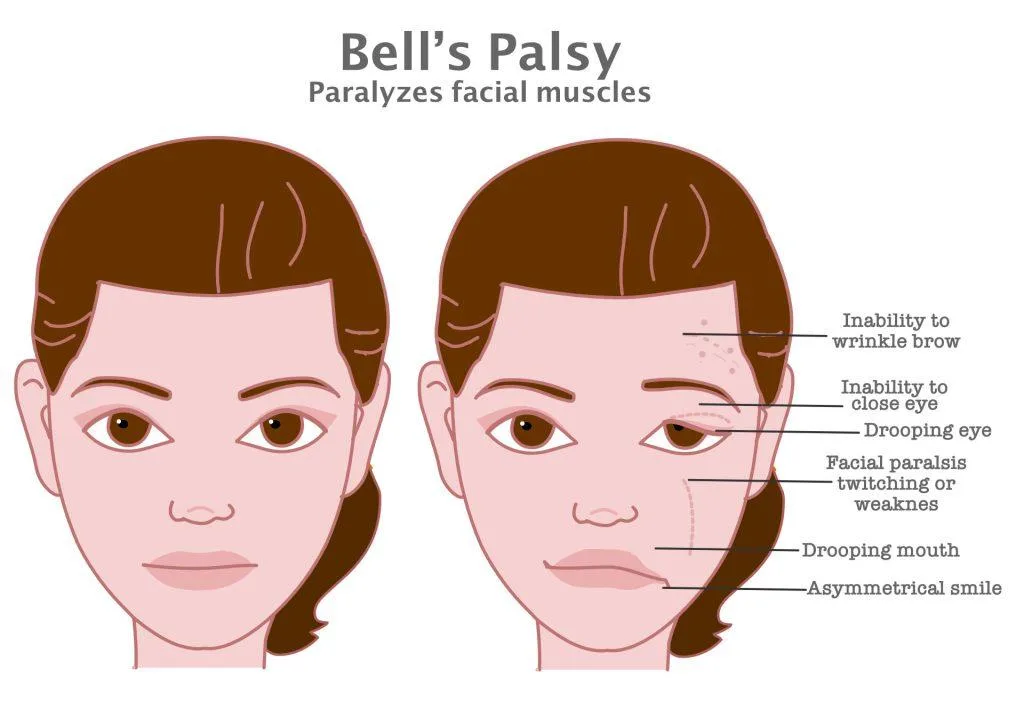
Symptoms usually develop over several hours or a few days. Many people first notice them while washing their face, brushing their teeth, eating or drinking. Typical symptoms affect one side of the face and may include:
- Difficulty raising the eyebrow, frowning or wrinkling the forehead
- Difficulty closing the eye fully, including during sleep
- A flattened smile line and drooping at the corner of the mouth
- Difficulty puffing out the cheek, with air escaping
- Drooling or liquid leaking from the corner of the mouth
- Pain around or behind the ear
- Changes in taste or sensitivity to sound
Important: Treat New Facial Drooping as an Emergency
Do not try to diagnose Bell’s palsy yourself. Facial drooping can be a sign of stroke. In New Zealand, use the FAST check: Face drooping, Arm weakness, Speech difficulties — Take action and call 111 immediately.
Even if facial weakness is your only obvious symptom, seek urgent medical assessment. A clinician needs to check the pattern of weakness and rule out stroke, infection, Ramsay Hunt syndrome and other causes.
How Is Bell’s Palsy Treated?
Early assessment matters because treatment is most effective when started within 72 hours of the first symptoms.
Medication
Oral corticosteroids such as prednisone are the main treatment for new-onset Bell’s palsy. They reduce inflammation and swelling around the facial nerve and can improve the chance of recovery. A doctor may consider antiviral medicine in selected cases, particularly when shingles or Ramsay Hunt syndrome is suspected; antivirals are not a substitute for corticosteroids and are not routinely needed for everyone.
Protecting the Eye
If the eye does not close fully, the cornea can become dry or injured. A doctor, optometrist or pharmacist may recommend lubricating eye drops during the day, ointment at night, and taping or patching the eyelid closed for sleep. Seek prompt care for eye pain, redness or any change in vision.
Acupuncture
Some people use acupuncture alongside medical care to help manage facial discomfort and support rehabilitation. Treatment should be provided by a qualified practitioner and tailored to the stage and severity of the condition. Acupuncture is a complementary option; it should not delay urgent assessment or replace prescribed medical treatment.
Facial Rehabilitation
As movement begins to return, gentle, controlled facial retraining may help coordination. Examples can include lightly raising the eyebrows, gently closing the eyes, wrinkling the nose, smiling and puckering the lips.
Avoid forceful or repetitive exercises, especially early in recovery. A physiotherapist or facial rehabilitation specialist can show you the right movements and help reduce the risk of developing unhelpful movement patterns. Stop and seek advice if an exercise worsens your symptoms.
Daily Self-Care
- Protect your eye: follow the eye-care plan provided by your healthcare professional.
- Take care when eating: choose manageable foods, chew slowly and check that food has not collected between the cheek and gum.
- Keep your mouth clean: rinse or brush after meals.
- Rest and manage stress: recovery takes time, and fatigue can make symptoms feel more difficult.
- Attend follow-up: return to your healthcare provider if symptoms worsen, new symptoms appear, or recovery is not progressing as expected.
Can Bell’s Palsy Be Cured?
The outlook is generally good. Around 80% of people begin improving within a few weeks and make a full recovery within two to three months, although recovery can take longer. A smaller number of people have ongoing weakness, tightness or involuntary linked facial movements.
Recovery depends on the initial severity of the nerve injury and how quickly appropriate treatment begins. Follow-up is especially important if symptoms are severe, the eye cannot close, symptoms continue to worsen, or there is little sign of improvement.
The Takeaway
Bell’s palsy can come on quickly and feel frightening, but most people recover well with timely medical care, careful eye protection and appropriate rehabilitation. The first priority is always to rule out stroke and other serious conditions, then begin treatment as early as possible.
If you have already received a medical diagnosis of Bell’s palsy and would like to discuss acupuncture as part of your recovery plan, book an assessment with Midtown Wellness.
Midtown Wellness
ACC-accredited clinic in Auckland CBD providing massage, acupuncture and physiotherapy. The hands with knowledge are powerful.