An easy-to-understand guide for patients.
Pain on the thumb side of your wrist when lifting your baby, using your phone, or opening a jar? You may be experiencing a condition called De Quervain’s tenosynovitis, commonly known as “Mother’s Thumb”.
This condition affects the tendons that help move your thumb and can make everyday activities uncomfortable.
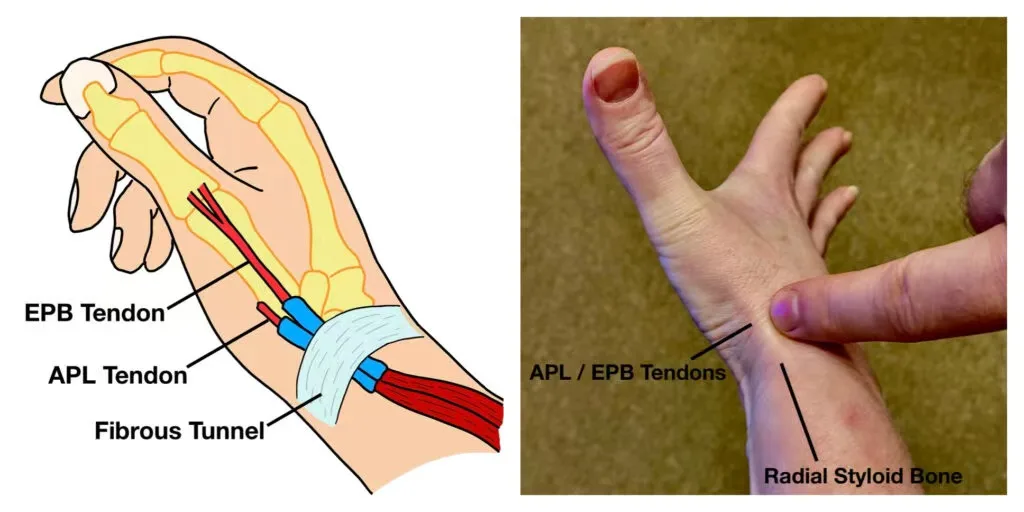
What Is De Quervain’s Tenosynovitis?
De Quervain’s tenosynovitis is a painful condition affecting two tendons on the thumb side of your wrist.
These tendons pass through a narrow tunnel near the wrist joint. When the surrounding tissue becomes thickened or irritated, the tendons may not glide smoothly, causing pain during thumb and wrist movements.
The two tendons involved are:
- Abductor Pollicis Longus (APL): Helps move your thumb away from your hand.
- Extensor Pollicis Brevis (EPB): Helps straighten your thumb.
When these tendons become irritated, activities involving gripping, lifting, or moving your thumb can become painful.
What Causes Mother’s Thumb?
The exact cause is not always clear. However, repeated hand and wrist movements can aggravate the condition.
Common contributing activities include:
- Repeatedly lifting or carrying a baby.
- Frequent mobile phone use or texting.
- Repetitive gripping and pinching.
- Gardening, cooking, or other manual activities.
- Work involving frequent thumb and wrist movements.
The condition is particularly common in women during late pregnancy and after childbirth. Repeatedly lifting a baby, especially with the wrist in an awkward position, may contribute to symptoms.
However, De Quervain’s tenosynovitis can affect anyone, regardless of occupation or whether they have children.
Common Symptoms
Symptoms usually occur on the thumb side of the wrist, near the base of the thumb.
You may notice:
- Pain when moving your thumb or wrist.
- Tenderness or swelling near the base of your thumb.
- Discomfort when gripping, pinching, or twisting objects.
- Pain when lifting a baby, shopping bags, or other objects.
- Difficulty opening jars or using scissors.
- Pain that may extend from the wrist into the forearm.
Symptoms can develop gradually or appear after an increase in repetitive activity.
How Is It Different from Trigger Thumb?
Although both conditions affect the thumb, they involve different structures.
De Quervain’s tenosynovitis causes pain mainly on the thumb side of the wrist and involves the APL and EPB tendons.
Trigger thumb affects the flexor tendon on the palm side of the thumb. It typically causes clicking, catching, or locking when bending or straightening the thumb.
Correct identification is important because the assessment and treatment approach may differ.
How Can You Manage Mother’s Thumb?
The appropriate treatment depends on the severity and duration of your symptoms.
1. Modify painful activities
Reduce repetitive gripping, forceful pinching, and movements that increase your pain. When lifting a baby, try to keep your wrists in a comfortable, neutral position and support the baby from underneath rather than lifting under the arms.
2. Consider a thumb and wrist splint
A thumb spica splint can help support the thumb and wrist while allowing irritated tissues to rest. It may be particularly helpful at night or during activities that aggravate your symptoms.
3. Apply a cold pack
If your wrist is painful or swollen, a cold pack wrapped in a towel may help relieve discomfort. Avoid placing ice directly on your skin.
4. Seek professional advice
If your symptoms persist or interfere with daily activities, a healthcare professional can assess your wrist and discuss suitable treatment options. These may include hand therapy or a corticosteroid injection. Surgery is occasionally considered when other treatments do not provide sufficient relief.
Can Acupuncture or Massage Help?
Acupuncture and gentle soft-tissue techniques may be considered as complementary approaches to help manage discomfort in some people. However, evidence for their effectiveness specifically in De Quervain’s tenosynovitis is limited.
These treatments should not replace appropriate assessment, activity modification, or other recommended medical care.
Avoid aggressive massage or deep pressure directly over the painful tendon area, particularly when the wrist is swollen or highly sensitive.
Treatment options can be discussed according to your symptoms and individual needs. If further medical assessment is required, we recommend seeking advice from an appropriate healthcare professional.
When Should You Seek Medical Advice?
Consider a professional assessment if your pain persists, swelling increases, or you have difficulty gripping objects or moving your thumb.
Seek prompt medical advice if you develop marked redness, warmth, severe swelling, fever, or sudden severe pain, as these symptoms may indicate a different problem requiring urgent assessment.
Take Care of Your Hands and Wrists
Your hands and wrists play an important role in everyday life. Recognising symptoms early, modifying aggravating activities, and choosing appropriate treatment can help you manage discomfort and maintain function.
If thumb or wrist pain is affecting your daily activities, book an assessment with Midtown Wellness.

Midtown Wellness
ACC-accredited clinic in Auckland CBD providing massage, acupuncture and physiotherapy. The hands with knowledge are powerful.