A painful click at the base of the thumb, stiffness when you wake up, or a thumb that catches in a bent position can all be signs of trigger thumb. The medical name is stenosing tenosynovitis.
Trigger thumb is a mechanical problem affecting how the thumb's flexor tendon glides through a small supporting structure in the palm. Symptoms range from mild tenderness to repeated locking that makes everyday gripping difficult. This guide explains the condition, how it differs from other causes of thumb pain, and the treatment options that may help.
What Is Trigger Thumb?
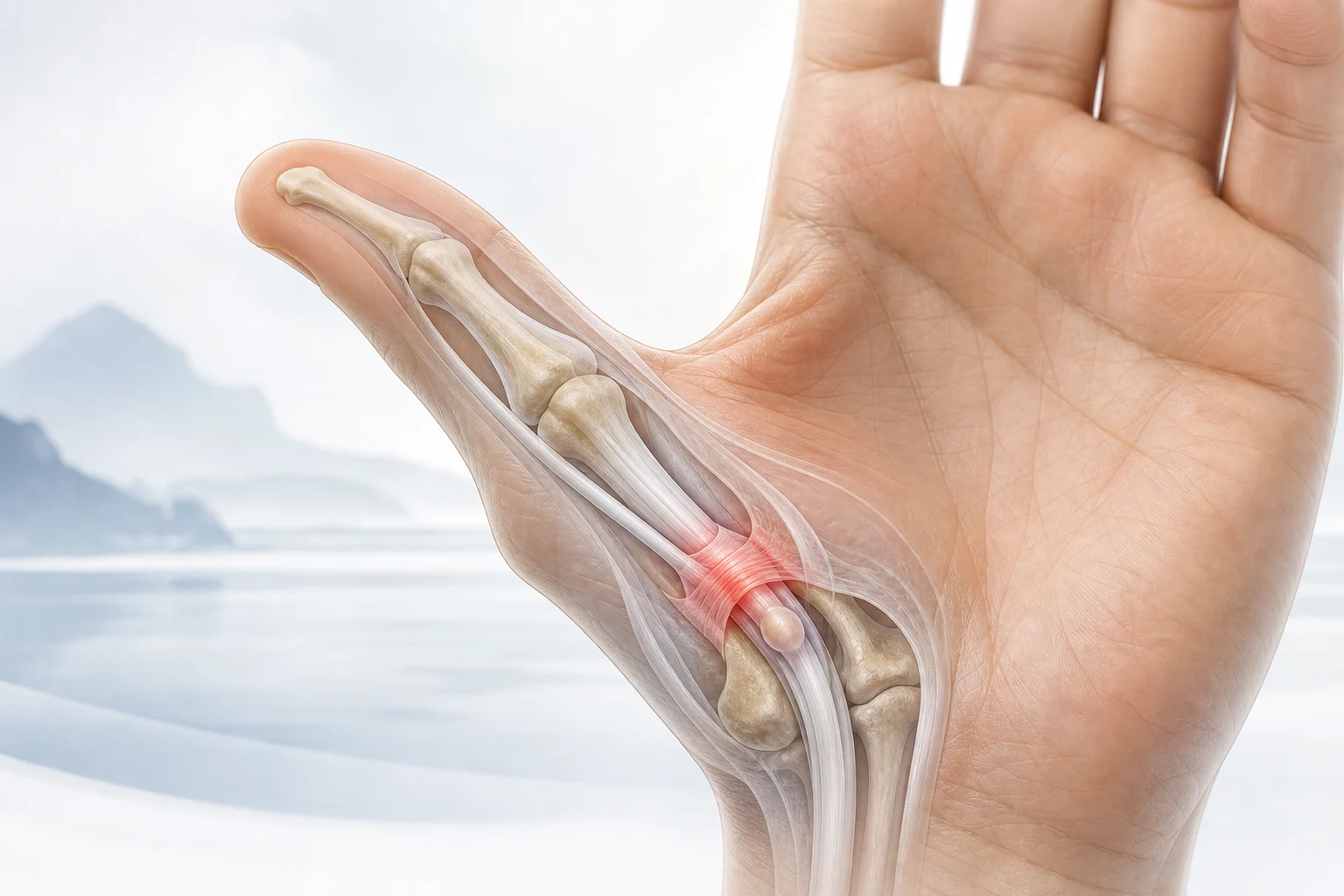
The flexor pollicis longus tendon bends the thumb. Near the metacarpophalangeal (MCP) joint at the base of the thumb, this tendon passes beneath a fibrous band called the A1 pulley. The pulley keeps the tendon close to the bone while allowing it to slide.
In trigger thumb, the tendon and pulley no longer glide smoothly. Thickening of the tendon or narrowing around the pulley can make the tendon hesitate, catch and then release suddenly. A small tender nodule may also be felt on the palm side at the base of the thumb.
Common Symptoms
- Pain or tenderness on the palm side at the base of the thumb
- A clicking or popping sensation as the thumb bends or straightens
- Catching, hesitation or locking during movement
- Stiffness that may be worse after rest or first thing in the morning
- A tender lump or nodule near the A1 pulley
- Needing the other hand to straighten the thumb in more advanced cases
Symptoms often fluctuate. Some people have pain without obvious catching at first, while others mainly notice locking or loss of movement.
Trigger Thumb or De Quervain Tenosynovitis?
These conditions are sometimes confused, but they involve different tendons and different locations.
- Trigger thumb usually causes tenderness at the base of the thumb on the palm side, with clicking, catching or locking.
- De Quervain tenosynovitis causes pain on the thumb side of the wrist, where two thumb tendons cross the wrist. It does not usually make the thumb lock at the A1 pulley.
A clinician can usually distinguish them by asking about the symptoms and examining where the pain and catching occur.
Why Does It Happen?
There is often no single identifiable cause. Trigger digits are more common after age 40 and in people with diabetes or rheumatoid arthritis. Repeated or forceful gripping may aggravate symptoms in some people, but it is not always the cause.
Other hand conditions can cause similar pain, so a diagnosis should not be based on symptoms alone if the presentation is unusual, follows an injury or does not improve.
How Is Trigger Thumb Diagnosed?
Diagnosis is usually clinical. A doctor or appropriately trained health professional may:
- Ask when the pain, clicking or locking occurs
- Feel the A1 pulley area for tenderness or a moving nodule
- Observe the thumb while it bends and straightens
- Check nearby joints, tendons, nerves and the wrist for other causes
Imaging is not routinely required. Ultrasound may be useful when the diagnosis is uncertain or another tendon or joint problem is suspected.
Treatment Options
Treatment depends on how long symptoms have been present, whether the thumb locks, other health conditions and how much daily function is affected. Some mild cases settle without an invasive treatment.
1. Activity Modification and Symptom Relief
Temporarily reducing activities that repeatedly provoke gripping or catching may help calm symptoms. A wrapped warm or cold pack can be used for comfort, depending on which feels better. Avoid applying ice directly to the skin.
Over-the-counter pain relief may be appropriate for some people, but anti-inflammatory medicines are not safe for everyone and do not correct the mechanical catching. Ask a pharmacist or doctor what is suitable for you, especially if you take other medicines or have stomach, kidney, heart or bleeding problems.
2. Splinting and Hand Therapy
A splint can hold the thumb in a comfortable position and reduce repeated triggering, particularly overnight. A hand therapist or physiotherapist may also assess contributing hand and wrist factors and guide gentle range-of-motion or tendon-gliding exercises.
Exercises should be comfortable and individualised. Repeatedly forcing a locked or painful thumb through the catch can increase irritation, so stop and seek advice if an exercise makes symptoms worse.
3. Corticosteroid Injection
A clinician may recommend a corticosteroid injection around the tendon sheath to reduce local swelling and improve tendon glide. It is a common non-surgical treatment, although the response varies and may be less predictable in people with diabetes. Possible benefits, risks and effects on blood glucose should be discussed with the treating clinician.
4. Acupuncture and Other Adjunctive Therapies
Acupuncture, electroacupuncture and laser acupuncture have been described for trigger digits, but the evidence for conventional acupuncture remains limited. Case reports and small case series can suggest possible benefit, but they cannot establish how well a treatment works compared with placebo, injection or surgery.
Some research has examined acupotomy, a small blade-like needle procedure, but this is not the same as standard acupuncture and the available studies have important limitations. If acupuncture is considered for pain relief, it should be provided by a suitably qualified practitioner after the diagnosis is clear, and it should not delay medical review of a persistently locked thumb.
5. A1 Pulley Release
If symptoms remain troublesome despite appropriate non-surgical care, or if the thumb is persistently locked, referral to a hand specialist may be appropriate. Surgical or percutaneous release opens the tight A1 pulley so the tendon can glide more freely. These procedures can be effective, but they also have risks, so the decision should be based on an individual assessment.
When to Seek Medical Advice
Arrange an assessment if the thumb repeatedly catches, pain is worsening, normal hand use is becoming difficult, or symptoms are not settling. Seek prompt care if:
- The thumb becomes fixed and cannot be gently straightened
- There is marked redness, heat, swelling, fever or a wound
- Symptoms began after a significant injury
- You develop numbness, weakness or a sudden loss of function
The Takeaway
Trigger thumb is caused by restricted movement of the thumb flexor tendon beneath the A1 pulley. Mild symptoms may improve with activity changes, splinting and guided hand therapy. Corticosteroid injection is a common next option, while release procedures are generally considered for persistent or locked cases. Acupuncture may be used as an adjunct for some people, but current evidence is much less certain than for established medical treatments.
If thumb pain, stiffness or catching is affecting your work or daily activities, book an assessment with Midtown Wellness. We can help identify the likely source of your symptoms, provide appropriate conservative care and recommend medical or hand-specialist review when needed.
Sources and Further Reading
- NHS: Trigger finger
- Comparative effectiveness of treatments for trigger finger: systematic review and network meta-analysis
- Ultrasound-guided acupotomy for trigger finger: systematic review and meta-analysis
This article provides general health information and is not a substitute for individual medical advice, diagnosis or treatment.

Midtown Wellness
ACC-accredited clinic in Auckland CBD providing massage, acupuncture and physiotherapy. The hands with knowledge are powerful.